A hygiene kit is a promise. Someone opens it, and in the first minute they decide whether it was worth carrying. The difference between a kit that gets used and one that gets left in a cupboard is rarely about the brand of toothpaste inside. It is about size, sealing, and whether the person has anywhere to keep it.
Church groups, food pantries, and shelters assemble these by the hundred. The kits that work are built around the person who receives them, not around the shelf where they are stored. A kit that needs water the recipient does not have, or a tube that will burst in a rucksack, or a brush with no wrapping that a stranger hesitates to touch, will sit unused. A kit programme succeeds when the kits get used, at volume, without wasting money, time, or good will.
What goes in a working kit
A working kit is small enough to carry and simple enough to use without instructions. For most programs, that means a toothpaste, a toothbrush, and floss, in a bag that closes. Some groups add a mouthwash or denture care items. Most keep it to three or four items. The more you add, the heavier the kit, and the more likely pieces get discarded.
Size matters because storage matters. A person in a shelter may have a locker the size of a shoebox. A person living in a car has a glovebox. A person moving between temporary homes does not want a bulky package. If the kit fits in a coat pocket or a small bag, it has a much better chance of being kept.
Sealing matters just as much. Toothpaste tubes leak when they are squeezed in a bag. A kit that arrives with paste smeared over the brush is a kit that gets thrown away. Look for tubes with a seal under the cap, and pack the kit so the tube sits upright or wrapped. Individual wrapping on the toothbrush keeps it clean even if the tube does leak.
Water is the quiet problem. Some kits assume the recipient has a sink, a tap, and time. Not everyone does. Someone sleeping in a car may brush with bottled water. Someone in a shared shelter may have a sink but no cup. If you include items that need water, say so on a small card. If you want a kit that works anywhere, favour a sealed packet of paste over a tube, because a packet can be used without a sink.
Here is what a basic kit looks like, item by item.
| Item | Why it is in the kit | Quantity per kit |
|---|---|---|
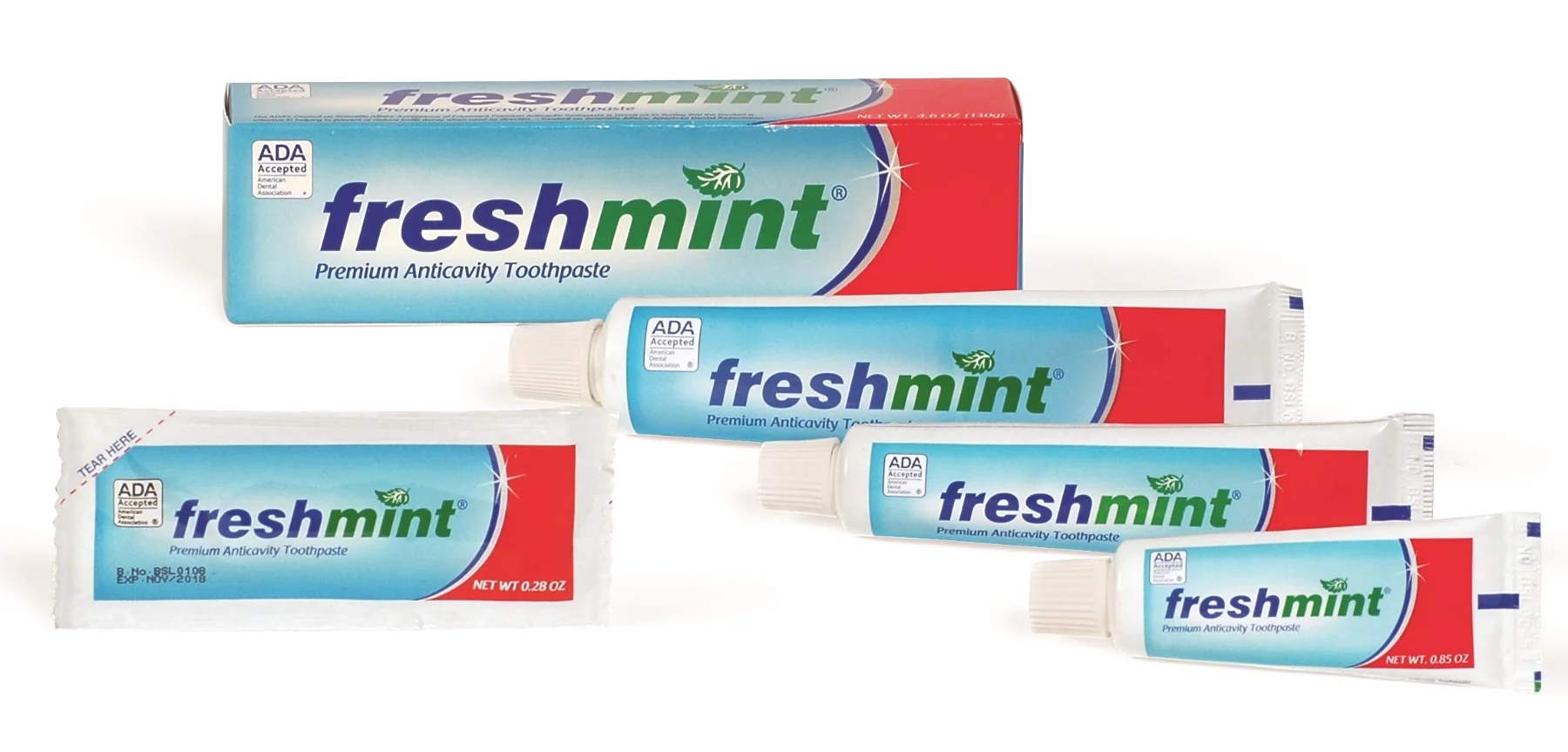
| Toothpaste, 0.6 oz tube or 0.28 oz packet | Removes plaque and delivers fluoride; small size fits a pocket | 1 |
| Toothbrush, soft nylon, individually wrapped | Cleans without damaging gums; wrapping keeps it clean | 1 |
| Floss, 12 yard spool | Cleans between teeth where a brush cannot reach | 1 |
| Sealable bag | Keeps items together and clean | 1 |
A kit that fits in a coat pocket is a kit that gets kept. A kit that needs a shelf is a kit that gets left.
Small tube or sealed packet
Two formats dominate oral care kits: the small tube and the sealed single-use packet. Each has a place, and the choice changes how the kit behaves in the field.
A small tube, like our 0.6 oz or 0.85 oz sizes, is the better choice when the recipient has a stable place to keep it. A tube lasts longer, allows repeated brushing, and is familiar. Most people know how to use a tube. It also takes up a little more room and is more likely to leak if squeezed. For a household kit, or a kit going to someone with a shelf or a drawer, a tube is the right call.
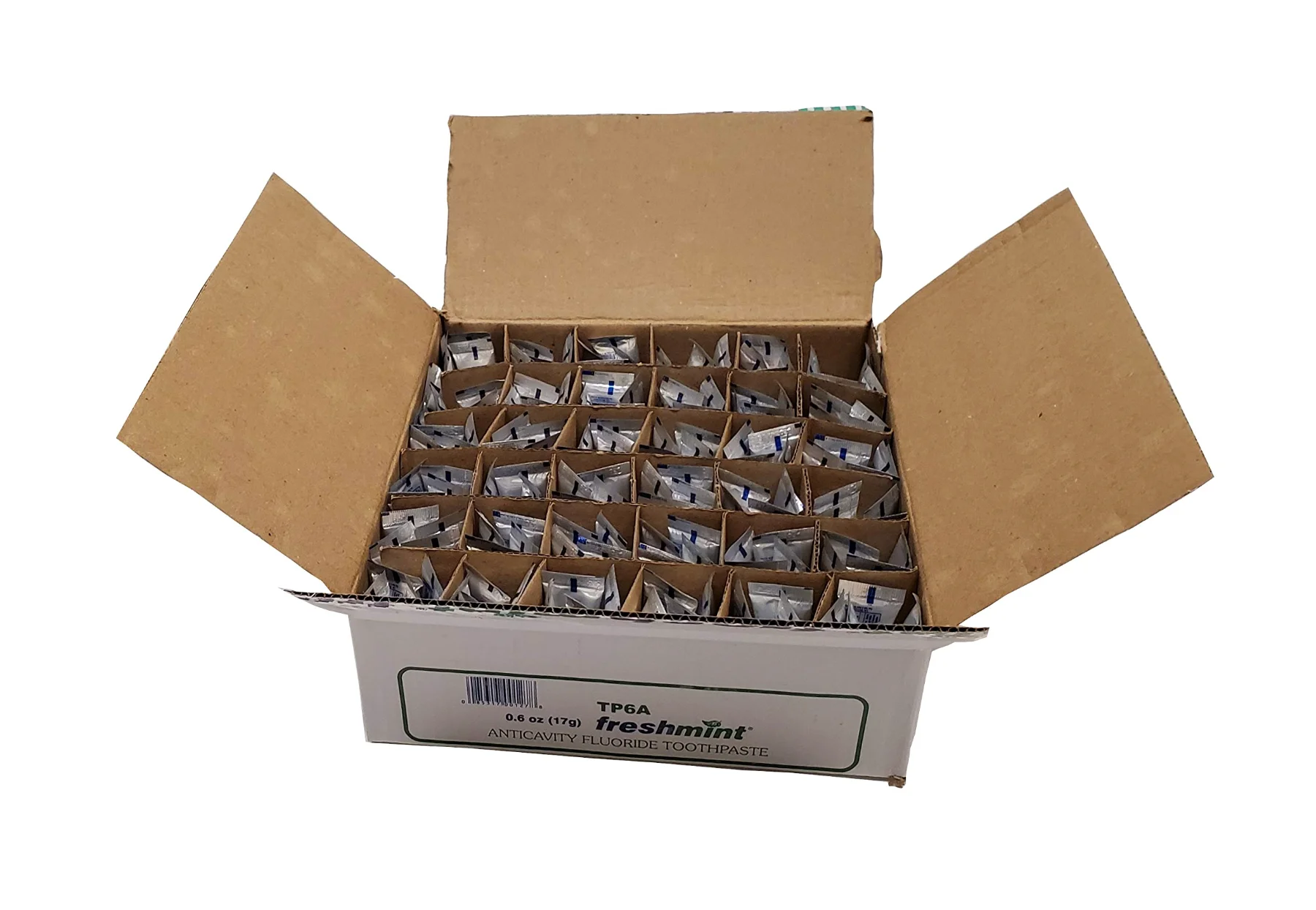
A sealed packet, at 0.28 oz, is a single brushing. It is flat, light, and impossible to leak. That suits a rucksack, a car, or a shared space where a tube would be borrowed or lost. In a shelter, a packet can be handed out and used on the spot, with nothing left over to store. In disaster relief, packets survive being dropped, crushed, or soaked.
The trade is simple. A tube gives more paste for the money and more uses. A packet gives portability and certainty. Many programs run both: tubes for home kits, packets for outreach or emergency kits. If you are packing for people who move around, packets are hard to beat.
Freshmint packets come in cases of 144, 250, 500, and 1,000, which makes volume packing straightforward. The paste inside is the same anticavity formula as our tubes, with the Drug Facts panel printed on the pack, because fluoride toothpaste is regulated as an over-the-counter drug in the US. That matters for programs that need to show what is inside.
If you are unsure which to choose, ask what the recipient will do with the kit. If they will keep it in one place, use a tube. If they will carry it, use a packet. If you do not know, a packet is the safer default.
Choosing a toothbrush that fits
The toothbrush is the most personal item in the kit, and the one most likely to be used or rejected. Two decisions matter: the bristles and the size.
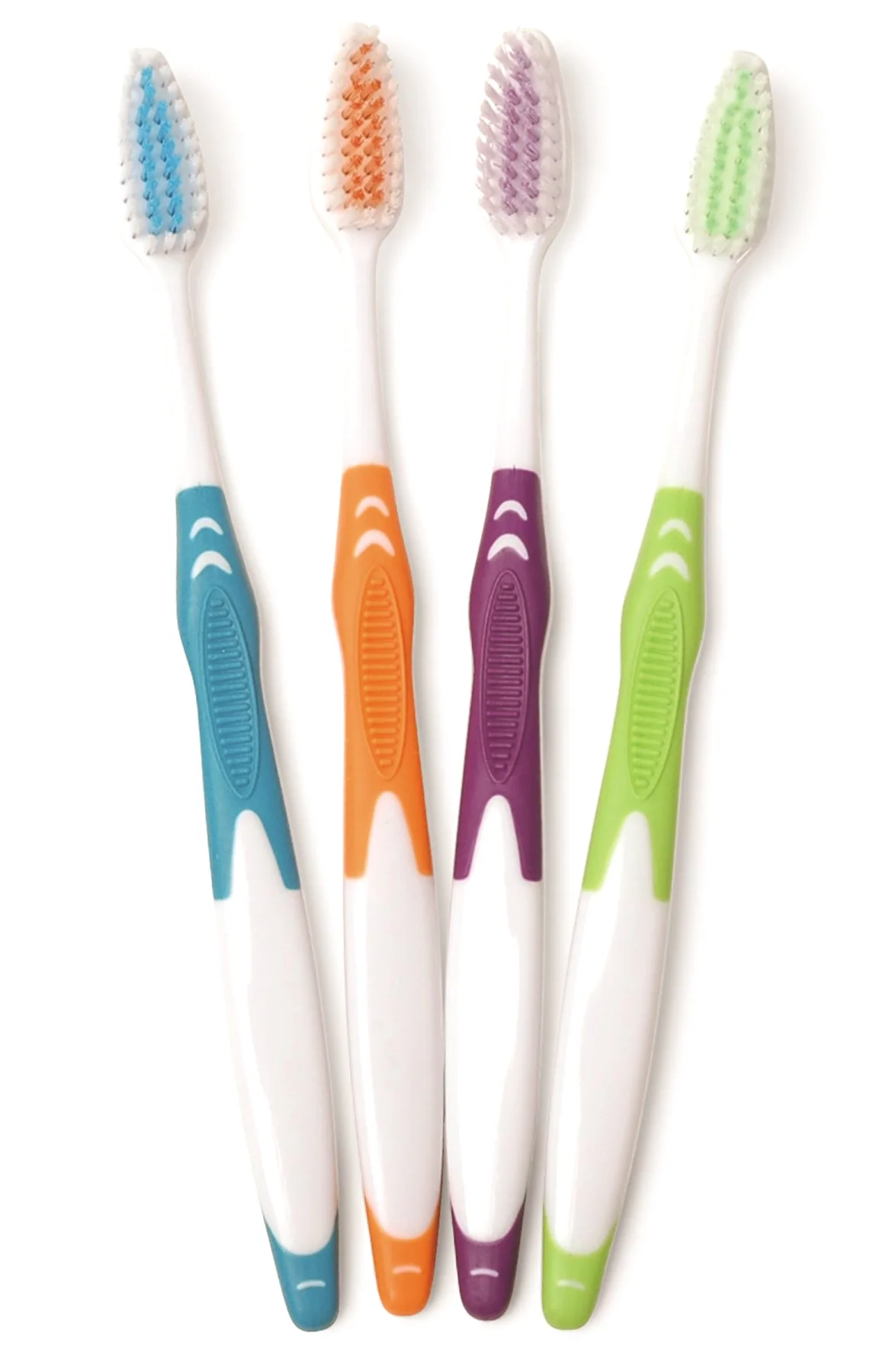
Soft nylon bristles are the right choice for nearly every recipient. Soft bristles clean effectively and are gentle on gums. Medium and hard bristles can irritate sensitive mouths, and there is no benefit for most people. If you are buying in bulk, standardise on soft. It is the safest, most useful option.
Size is the second decision. Adult brushes fit most hands and mouths. Pediatric brushes are smaller, with a smaller head, and suit children under about eight. If your kit is for a general population, adult brushes are the default. If you are packing for a school program or a family shelter, include pediatric brushes for the younger recipients. A kit with an adult brush for a six year old is a kit that does not get used.
Individual wrapping matters more than it seems. A brush that arrives loose, even if it is new, makes a stranger hesitate. Is it clean? Has it been touched? A brush sealed in its own wrapper answers that question before it is asked. Every Freshmint brush comes individually wrapped in its own bag, so there is nothing to cut or tear open when handing them out. That matters when the person receiving the kit has no way to wash the brush first.
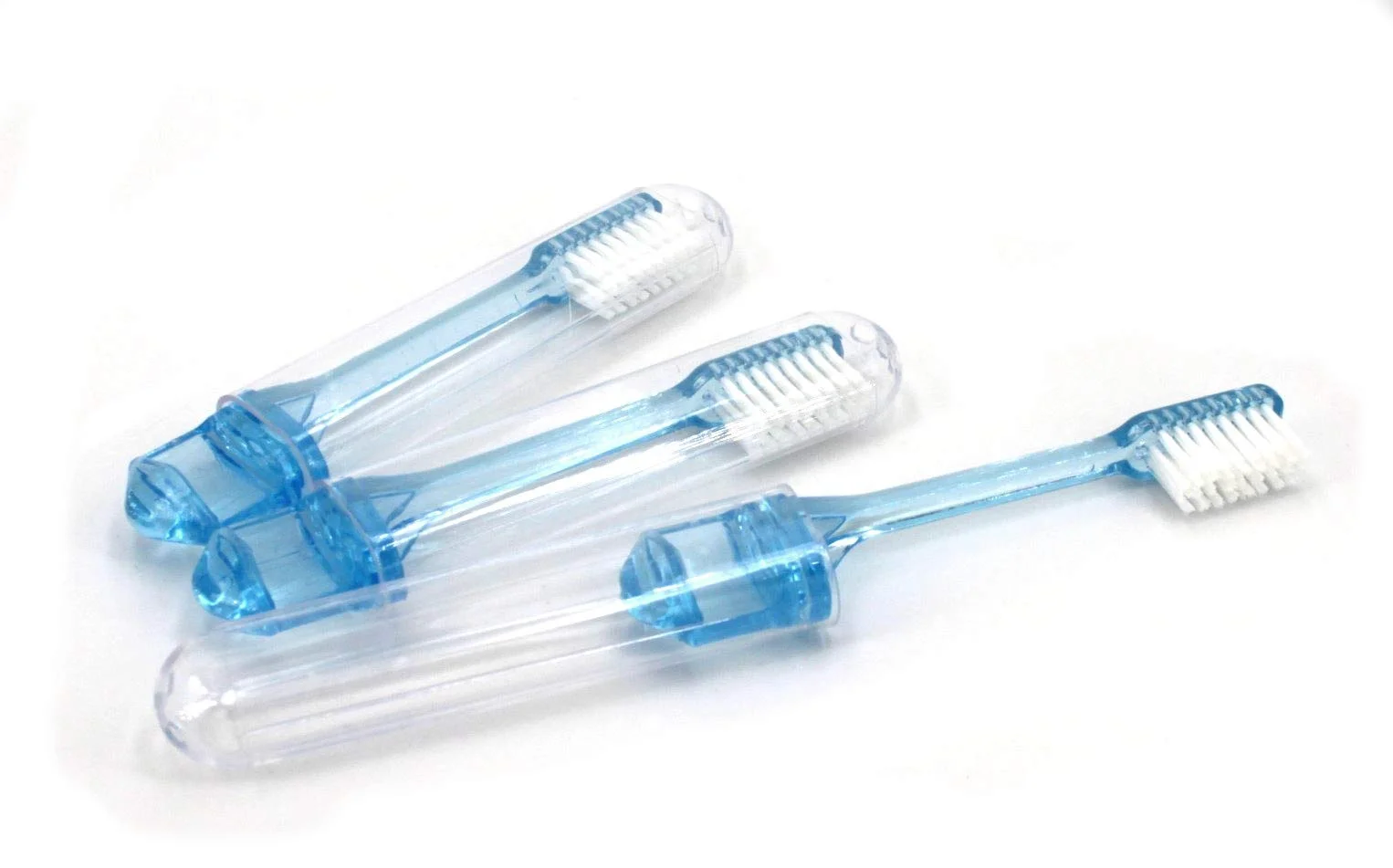
The two-piece travel brush is a smaller option worth knowing about. The head stores inside the handle, so the whole thing is about the length of a finger. It suits a pocket kit, a car, or a disaster bag. It does not replace a full-size brush for daily home use, but it is a good addition to an emergency kit, and some programs pair it with a tube of paste for a pocket-sized set.
One more note: if you are packing for children, a bright color or a familiar character helps. But do not assume a child will use a brush just because it is colorful. The wrapping, the soft bristles, and the right size do the real work.
Floss: when it earns its place
Floss is the easiest item to leave out of a kit, and the hardest to justify once you know what it costs in weight and space. A spool of waxed mint floss at 12 yards is small, but it is not nothing.
What does 12 yards cover? A typical flossing session uses about 18 inches. That is about a foot and a half of floss per use. Twelve yards, or 36 feet, works out to about 24 uses. For a kit meant to last a month, that is roughly one flossing every other day. For a kit meant to be used once or twice, it is more than enough.
Include floss when the kit is for someone who has a stable place to live and a routine that includes oral care. A person in a shelter may not floss, but they might, and the spool costs little. A person sleeping rough is more likely to use a toothbrush and paste than floss, because flossing takes time, water, and a mirror. In those kits, floss can be dead weight.
The guidance on cleaning between the teeth is consistent: brushing alone does not reach the spaces between teeth. Floss, or another interdental cleaner, is the standard recommendation. But a kit is not a prescription. If the program's goal is basic hygiene, a toothbrush and paste do the essential work. Floss is a bonus, not a requirement.
One practical point: waxed floss is easier to use than unwaxed, and mint flavor makes it more pleasant. A 12 yard spool fits in a pocket and survives being carried. If you include floss, put it in the bag with the brush, not loose in the box, so it does not get lost.
When to leave it out: kits for very young children, where flossing is a parent's job and the spool will be ignored. Kits for emergency use, where a single brushing is the goal. And kits where every gram of weight matters, such as air-dropped or long-distance relief supplies. When in doubt, include it. It is a small item, and a kit that has it is more complete.
Counting kits and cases of 144
The fastest way to waste money on a kit run is to buy too little and have to reorder, or to buy too much and store the surplus. The solution is to work backwards from the number of kits, not forwards from the budget.
Freshmint cases run 144 units: 144 tubes of toothpaste, 144 toothbrushes, 144 floss spools. Some items come in other case sizes, like 100 or 1,440 brushes, and single-use packets in 144, 250, 500, or 1,000. But for a standard kit of tube, brush, and floss, the 144 case is the unit to plan with.
The rule is simple: divide the number of kits by 144 and round up to the nearest whole case. If you are packing 25 kits, you need one case of each item, even though you will use only 25 of the 144. If you are packing 250 kits, you need two cases of each, because 250 divided by 144 is 1.7, and you round up to 2. The leftover units are not waste. They become the start of the next run, or they cover breakage and loss.
Here is the table for common run sizes.
| Kit run | Toothpaste | Toothbrushes | Floss |
|---|---|---|---|
| 25 kits | 1 case of 144 | 1 case of 144 | 1 case of 144 |
| 50 kits | 1 case of 144 | 1 case of 144 | 1 case of 144 |
| 100 kits | 1 case of 144 | 1 case of 144 | 1 case of 144 |
| 250 kits | 2 cases of 144 | 2 cases of 144 | 2 cases of 144 |
Per unit prices come from our own catalogue figures. A tube of everyday 0.6 oz paste works out at about a quarter at case quantities. A wrapped brush runs about twelve to twenty-five cents. A single-use packet runs ten to twenty cents. Those numbers let you estimate a run before you commit. For 100 kits, the oral care contents work out to roughly forty to seventy dollars, depending on the brush you choose.
Round up every time. A kit missing a toothbrush is a failed kit. A case with eleven brushes left over is not a problem. And if you are ordering for a run that will grow, order the larger case size now. The per unit price drops, and the surplus is useful.
Packing a kit without wasting a day
Assembly is where many kit programs stall. A hundred kits, each with three items, is three hundred items to place. Without a system, volunteers drift, items get missed, and boxes end up half full.
The first decision is whether to pre-wrap. Items already individually wrapped, like our toothbrushes, cut assembly time because there is nothing to open. A brush in its own bag goes straight into the kit bag. A tube with a seal under the cap needs no extra wrapping. The less handling each item needs, the faster the line moves.
Set up an assembly line. One table, volunteers in a row, each with a single task. One person places a tube in the bag. The next places a brush. The next places floss. The last person closes the bag and drops it in the box. This sounds obvious, but it is the difference between a morning and a day. Each volunteer repeats one motion, so mistakes are easy to spot and easy to fix.
Check as you go. Put a sample kit at the head of the line, taped to the table, so everyone can see what a finished kit looks like. Have the last person count kits in groups of ten. A rubber band around every ten bags makes counting fast and gives you a quick sense of progress.
Leftovers are not a problem. At the end of a run, you will have partial cases of tubes, brushes, and floss. Keep them in a labelled bin for the next run. Do not force leftover items into kits that are already sealed. A kit with two tubes and no brush is worse than a kit with one of each.
One more tip: pack the bag so the brush is on top. When the recipient opens the kit, the first thing they see is the clean, wrapped brush. It sets the tone for everything else.
Handing out with respect
The moment of hand-off decides whether a kit gets used. A kit handed over with a kind word and a clear explanation is a kit that gets opened. A kit shoved across a counter with no context is a kit that gets abandoned.
Say what is inside and why. "This has toothpaste, a toothbrush, and floss. The toothpaste has fluoride, which helps prevent cavities." That is enough. Do not lecture. Do not assume the person has never brushed their teeth. They may have, yesterday, in a home they no longer have.
Do not promise what the kit cannot deliver. A kit is not dental care. It does not treat a toothache, fix a broken tooth, or replace a visit to a dentist. If the person has pain or visible decay, say so plainly and point them to the nearest clinic or health centre if you know of one. Honesty builds trust. Overpromising builds disappointment.
Dignity matters more than efficiency. Let the person choose their own kit if you can. A table where people pick their own tube and brush feels different from a line where a box is pushed at them. If you must pack identical kits, make them identical in a good way: same items, same quality, no seconds, no expired stock.
A kit is not a lecture. It is a useful thing, given without judgment, that a person can use on their own terms.
What not to say: "You should brush twice a day" as a demand. What to say: "This paste is good for your teeth. Use it when you can." The goal is that the kit gets used, not that the recipient feels corrected.
A kit is also not a diagnosis. If someone asks whether they need a dentist, the honest answer is that a kit does not answer that. Refer them to care if you can, and let the kit do its small job.
What health guidance actually says
National health agencies are consistent on the basics of oral hygiene, and a kit program should reflect that guidance without embellishing it.
Brush twice a day with a fluoride toothpaste. That is the core recommendation. Fluoride strengthens enamel and helps prevent cavities. The paste in our tubes and packets contains sodium fluoride or sodium monofluorophosphate as the active ingredient, and the Drug Facts panel is printed on the pack because fluoride toothpaste is regulated as an over-the-counter drug in the US. A kit that includes fluoride toothpaste is aligned with the standard advice.
Clean between the teeth once a day. Floss, or another interdental cleaner, reaches the surfaces a brush cannot. The guidance is consistent across agencies, even if the exact wording differs. A spool of floss in the kit supports this, but it is not a requirement for a basic kit.
For young children, the advice is more specific, and it belongs with a dentist or doctor. National agencies recommend that parents and caregivers talk to a health professional about when to start fluoride toothpaste and how much to use, because the right amount depends on the child's age and risk of cavities. A kit program should not guess at this. If you are packing for young children, include a note that directs parents to their dentist or doctor for guidance on fluoride use.
What the guidance does not say: that a kit replaces dental care, that mouthwash is essential, or that any single product prevents all cavities. The honest summary is simple. Brush with fluoride twice a day, clean between the teeth once a day, and see a professional when you can. A kit is a bridge to that, not a substitute for it.
Fluoride-free options for young children
Most kits should include fluoride toothpaste, because fluoride is the ingredient that prevents cavities. But there are programs where a fluoride-free option is the right call, and it is worth knowing why.
The main reason is age. National health guidance says the decision about fluoride toothpaste for young children should be made with a dentist or doctor. Some parents prefer to avoid fluoride for their children until they have had that conversation. A fluoride-free paste gives a program a way to serve those families without making the decision for them.
Another reason is preference. Some adults, for personal or health reasons, prefer to avoid fluoride entirely. A fluoride-free option in a kit respects that choice. It does not mean the paste is ineffective at cleaning. It means the cavity-prevention benefit is not there, and the kit should say so honestly.
Freshmint's kids paste is fluoride-free, in bubble gum flavor, and comes in a 0.85 oz tube. That is a good size for a child's kit. The flavor matters: bubble gum is more appealing to a child than mint, and a child who likes the taste is more likely to brush.
If you offer both, label the kits clearly. A fluoride-free kit and a fluoride kit should not look identical. A simple sticker or a note in the bag tells the recipient what they are getting. Do not hide the difference.
And keep the fluoride-free option in proportion. For most recipients, fluoride toothpaste is the better choice. Fluoride-free is a niche, not a default. Offer it as an alternative, not as the main item. That respects both the guidance and the people you serve.
Before the boxes are opened
A finished kit run is not the end. Before the boxes leave, run through a short list of checks.
Open a sample kit from the top, middle, and bottom of each box. Confirm each has every item. A missing floss spool is easy to miss in a dark box.
Check the dates. Toothpaste has a shelf life, and so does floss, though floss lasts much longer. If any item is close to its expiration date, do not put it in a kit. A kit with expired paste is a kit that gets thrown away, and it damages trust.
Check the sealing. Squeeze a sample tube gently. Does the cap hold? Is the seal intact under the cap? A tube that leaks in the box ruins everything around it.
Count the boxes. Multiply kits per box by number of boxes and confirm it matches your run size. If you planned 250 kits and have 240, find the missing ten before you leave.
Think about the hand-off. Who is giving out the kits? Do they know what is inside and why? A two-minute briefing for volunteers is worth more than an extra item in the bag.
A kit is a small thing. But a kit that gets used does real work: it keeps teeth clean, it prevents pain, and it tells someone that their mouth matters. That is the whole point. Build the kit so it gets used, pack it so it survives, hand it over with respect, and it will do its job.
Everything named here sits in Freshmint bulk oral care, on the toothbrushes shelf and the seven beside it.