What the Drug Facts panel on a tube of toothpaste is telling you
The Drug Facts panel on a tube of toothpaste looks out of place at first. Same layout as the box of pain reliever in your medicine cabinet. Same bold headings. Same small print. If you have noticed that and wondered why it is there, the reason is written into federal law.
The short answer: fluoride toothpaste is a drug in the eyes of the US Food and Drug Administration. Not a dramatic drug, but a drug under the rules, and the rules require the panel. The longer answer is more interesting. It explains what the panel is actually telling you, what it is not telling you, and how to read the small print with confidence on any tube you pick up.
Why the panel is there
Fluoride toothpaste is regulated as an over-the-counter drug in the United States. The FDA classifies it that way because it contains a substance intended to affect the structure of the body, specifically the enamel on your teeth. That places it under the same legal umbrella as pain relievers, antacids, and cough syrup.
The rules come from a federal monograph. A monograph is a published standard that sets out exactly what a category of drug may contain, what claims it may make, and what wording must appear on the pack. For anticavity toothpaste, the monograph is specific. The active ingredient must be one of a listed set of fluoride compounds. The claim must be worded as "aids in the prevention of cavities" or something close to it. The warnings, directions, and inactive ingredient list all follow a fixed format.
What this means in practice: the panel is set by rule, not written by a marketing department. Every tube of anticavity toothpaste on the shelf in the United States carries essentially the same Drug Facts panel, whatever name is on the front. The differences between brands show up in the inactive ingredients, the flavor, the texture, and the packaging, not in the legal wording. That is reassuring in a way. The words you are reading are not sales copy. They are a regulated label.
The monograph also explains the layout. Drug Facts panels are standardized so a shopper can find the active ingredient, the purpose, and the warnings without hunting. The format is federal. The headings are fixed. The print is small but consistent.
The active ingredients we carry
Freshmint carries two fluoride compounds across its toothpaste shelves: sodium fluoride and sodium monofluorophosphate. Both are listed in the federal monograph as acceptable active ingredients for anticavity toothpaste. Both do the same job, delivering fluoride ions to the enamel, but they are different molecules and they appear at different percentages on the label.
Sodium fluoride is the compound you will see on most anticavity toothpaste labels in the United States. Sodium monofluorophosphate is the other accepted option, and it shows up on a smaller share of tubes. The percentage printed on the panel reflects the amount of the compound in the paste, not the amount of fluoride ion. That is why the numbers look different between the two: a tube with sodium monofluorophosphate often shows a higher percentage than a tube with sodium fluoride, even though both deliver a comparable amount of fluoride to the teeth. The Drug Facts panel tells you the concentration as a percentage, and the percentage is part of the regulated wording. It is there so the product can be evaluated against the monograph, not so you can do chemistry in the aisle.
The anticavity claim is narrow on purpose. The monograph allows a paste to say it "aids in the prevention of cavities." That is the ceiling. A fluoride toothpaste is not allowed to claim whitening, gum disease treatment, or any other benefit in the Drug Facts panel, because those claims would go beyond what the monograph covers. Some brands put additional claims on the front of the tube, and those claims are regulated separately, but the Drug Facts panel stays within its lane.
How fluoride works on enamel
The way fluoride protects teeth is worth understanding, because it changes how you think about toothpaste.
Your mouth is full of bacteria. When you eat, the bacteria feed on sugars and produce acid. That acid attacks the enamel, the hard outer layer of the tooth, and dissolves some of its mineral content. This is called demineralization. It happens to some degree after every meal or snack. If the acid wins more often than the minerals are replaced, the enamel weakens and a cavity forms.
Fluoride changes the balance. When fluoride is present in the mouth, it helps the enamel pull minerals back from the saliva. This is remineralization. The repaired enamel is not identical to the original. It incorporates fluoride into its structure, and that new structure is harder to dissolve in acid. So fluoride does two things: it helps repair damage that has already started, and it makes the enamel more resistant to the next acid attack.
The key detail is that fluoride works best as a steady low presence in the mouth rather than as a single dose. A rinse, a swish, a brush: each one leaves a little fluoride behind. The constant background level is what does the real work. That is why brushing twice a day matters more than brushing once with a large amount of paste. The habit creates the steady presence. The paste supplies the fluoride.
This also explains why fluoride toothpaste is regulated the way it is. The active ingredient is not a flavor or a texture. It is a substance with a measurable effect on the structure of the teeth, and the federal rules treat it accordingly.
Reading the Drug Facts panel
The panel looks intimidating until you know what each line is for. Once you do, it reads quickly. Here is what each part of the panel on our tubes is telling you.
Read the panel once and you know what the paste contains, what it may claim, and what the manufacturer is required to tell you. The rest of the tube is about flavor and texture.
| Line on the panel | What it means | Where to look on our tubes |
|---|---|---|
| Active ingredient | The fluoride compound doing the anticavity work, with its concentration as a percentage | Top of the panel, in bold, on every Freshmint anticavity tube |
| Purpose | The regulated claim, usually "anticaavity" | Directly under the active ingredient |
| Uses | The allowed wording, "aids in the prevention of cavities," or the equivalent | Listed plainly, not in marketing language |
| Warnings | Safety instructions, including keeping the paste out of the reach of children under six | The middle block, easy to miss but worth reading |
| Directions | How much to use, how long to brush, and the instruction to spit rather than swallow | Below the warnings, in the same standard format |
| Inactive ingredients | Everything else in the tube: the abrasive, the humectant, the flavor, the sweetener, the thickener | Bottom of the panel, in alphabetical order |
The warnings line deserves a moment. A fluoride toothpaste is safe for normal use, but it is a drug, and the warnings reflect that. The instruction to keep tubes away from young children is not a formality. A small child who swallows a large amount of fluoride paste can get an upset stomach, and the panel tells you what to do if that happens. The directions line, similarly, is specific: use a pea-sized amount for children, brush for two minutes, spit, and do not swallow. That is not a suggestion. It is part of the regulated label.
Inactive ingredients are not filler
The inactive ingredient list on a Freshmint tube includes the abrasive that does the physical cleaning, the humectant that keeps the paste from drying out, the flavor, the sweetener, and the thickener. None of them are secret. The list is alphabetical, which is the regulated format, not an order of importance. The ingredients are there for the same reason they are on any drug label: so you can see exactly what is in the product.
The ADA Seal of Acceptance
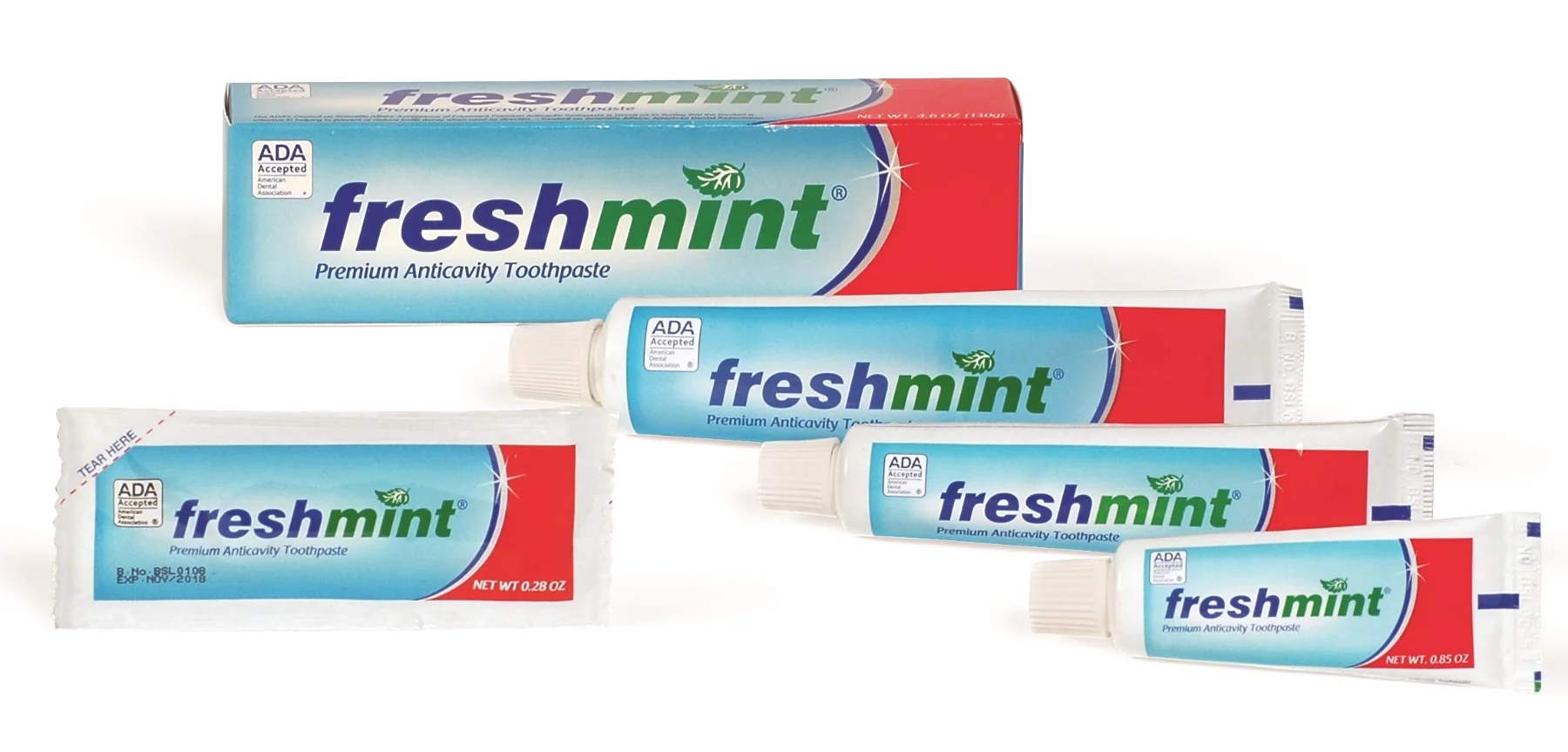
Some of our premium anticavity tubes carry the ADA Seal of Acceptance. The Seal is worth understanding, because it is easy to overread.
The Seal is awarded by the American Dental Association. A company submits its product, along with evidence about its safety and effectiveness, to the ADA's Council on Scientific Affairs. The Council evaluates the evidence. If the product meets the standards, the company is allowed to use the Seal on the packaging. It is not a marketing claim that the brand invented. It is an independent evaluation.
For an anticavity toothpaste, the Seal means the product contains fluoride and that the cavity-prevention claim is supported by the evidence the company submitted. The ADA's standards for an accepted paste also exclude sweeteners that feed decay. A paste that is sweetened with something that promotes cavities cannot earn the Seal, because the sweetener would work against the paste's own purpose.
Here is what the Seal is not. It is not a health claim about the person brushing. It does not say that using this toothpaste will keep you cavity-free, or that your teeth will be stronger than someone else's, or that you can skip the dentist. The Seal is a statement about the product: this paste does what it claims, and it does not contain ingredients that undermine the claim. The rest of oral health, the brushing habit, the diet, the dental visits, is up to you.
The presence of the Seal on a tube is a useful shortcut when you are comparing pastes. It tells you that the anticavity claim has been evaluated by a body that is not the manufacturer. It does not tell you that this paste is better than another accepted paste. Both are accepted. Both meet the standard.
Children and fluoride amounts
Children need fluoride, but they need less of it, and they need supervision. The amounts are small and precise, and the decision about a child under six belongs with a dentist or a doctor.
The concern with young children is swallowing. A child who cannot reliably spit will swallow some paste, and fluoride swallowed in quantity is not good for developing teeth. The answer is not to skip fluoride. The answer is to use the right amount and to watch.
| Age | How much paste | Who decides |
|---|---|---|
| Under two | Ask a dentist or doctor first | A professional, before any paste is used |
| Two to three | A smear the size of a grain of rice | The parent, following the professional's guidance |
| Three to six | No more than a pea | The parent, with supervision |
| Six and over | Brush twice a day and spit, do not swallow | The child, once they can spit reliably |
The grain of rice smear for a two year old is genuinely tiny. It is barely visible on the brush. That is the point. A small child does not need a full ribbon of paste. They need enough fluoride to protect the teeth that are coming in, and not so much that swallowing becomes a problem.
The pea-sized amount for children three to six is the standard guidance from national health agencies. Supervision matters at this age. A child can brush, but an adult should put the paste on the brush and watch to make sure it is spit out. The habit of spitting rather than swallowing is the real lesson of this stage, and it takes time to learn.
For children six and over, the routine settles into the adult pattern: a full brush twice a day, spit, do not swallow. By this age most children can manage it without supervision, though a quick check never hurts.
The guidance for children under two is the strictest. A dentist or doctor should be consulted before any fluoride toothpaste is used. This is not because fluoride is dangerous for a baby. It is because the right amount depends on the child's risk of cavities, their water supply, and other factors that a professional is best placed to weigh.
The amount of paste on the brush matters more for a small child than the brand of paste. Use the smear or the pea, and let the child spit.
Fluoride-free paste and the honest trade-off
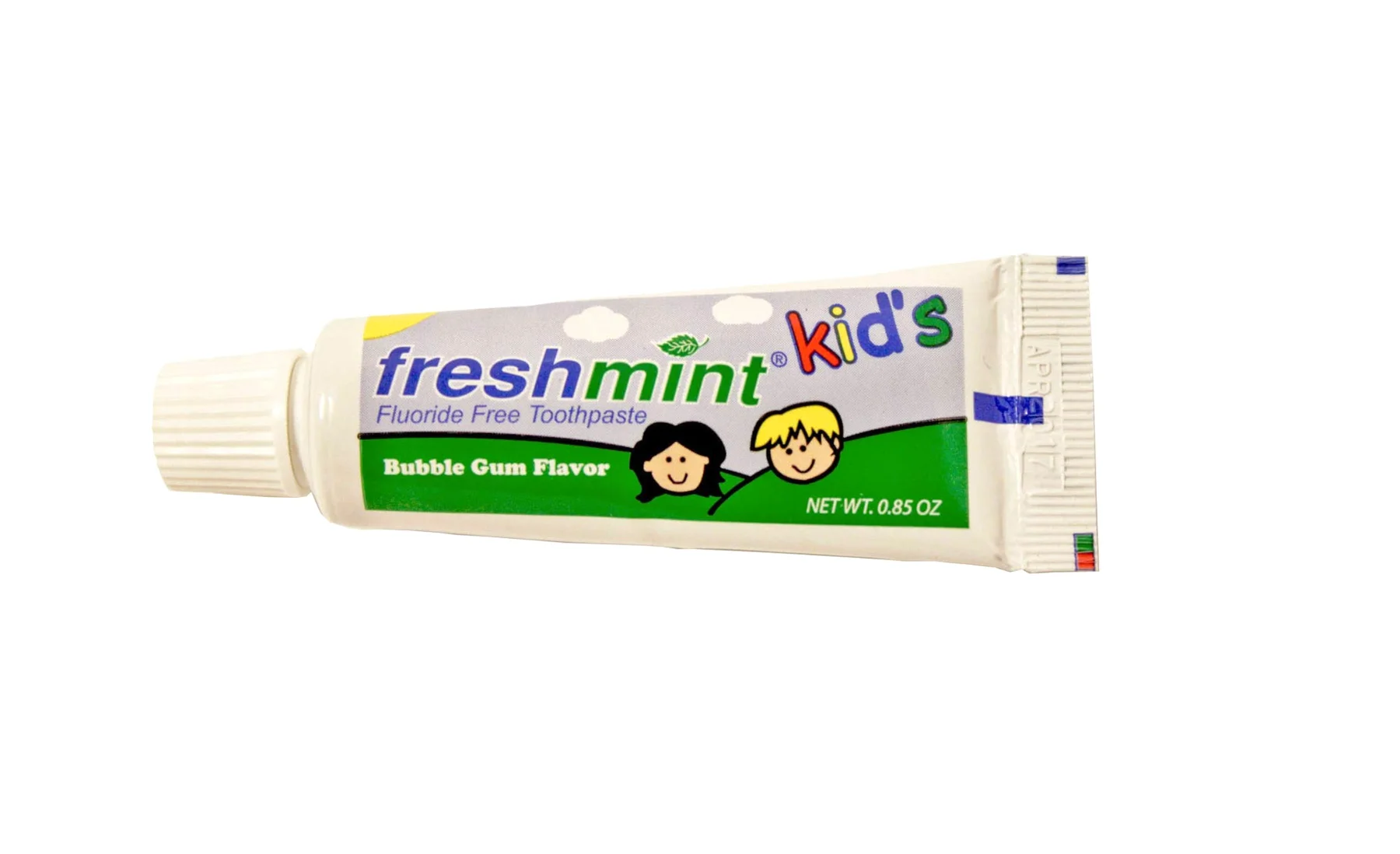
Not every toothpaste contains fluoride. Freshmint carries a fluoride-free paste in the kids line, and it is worth being clear about what that means.
Fluoride-free toothpaste exists for a few reasons. Some parents prefer to avoid fluoride for their children, sometimes on the advice of a dentist, sometimes out of personal conviction. Some adults prefer it for themselves. The market for fluoride-free toothpaste is real, and it is served by real products.
The honest trade-off is this: a fluoride-free paste is not making an anticavity claim. It cannot, because the active ingredient that prevents cavities is fluoride, and without it, the paste has no regulated anticavity function. A fluoride-free toothpaste cleans the teeth. It removes plaque and food debris with its abrasive. It freshens the breath. It does not strengthen enamel against acid, and it does not aid in the prevention of cavities. That is the difference, and it is a real one.
Our fluoride-free kids paste is bubble gum flavored and carries no Drug Facts panel, because it contains no active drug ingredient. It is a cosmetic product in the regulatory sense. That does not make it a bad product. It makes it a different product. The choice between fluoride and fluoride-free is a choice about what you want the paste to do.
Sensitive formulas and what they address
Tooth sensitivity is a common complaint. It shows up as a sharp twinge when you eat something cold, or hot, or sweet, or when you breathe in cold air. The cause is usually exposed dentin, the layer beneath the enamel, where microscopic channels lead to the nerve.
Sensitive toothpaste is formulated for people who feel that twinge. The formulas work on those channels, and they still contain fluoride for cavity prevention. The Drug Facts panel on a sensitive tube will list the fluoride as the active ingredient, and the sensitivity claim appears separately, either on the front of the tube or in additional labeling. The sensitivity benefit does not replace the anticavity function. It sits alongside it.
Sensitive teeth are a reason to see a dentist, not just to change toothpaste. A paste can help with the twinge, but it does not diagnose why the dentin is exposed. If sensitivity appears suddenly, or if it is limited to one tooth, a professional should take a look.
Clear gel toothpaste and practical reasons
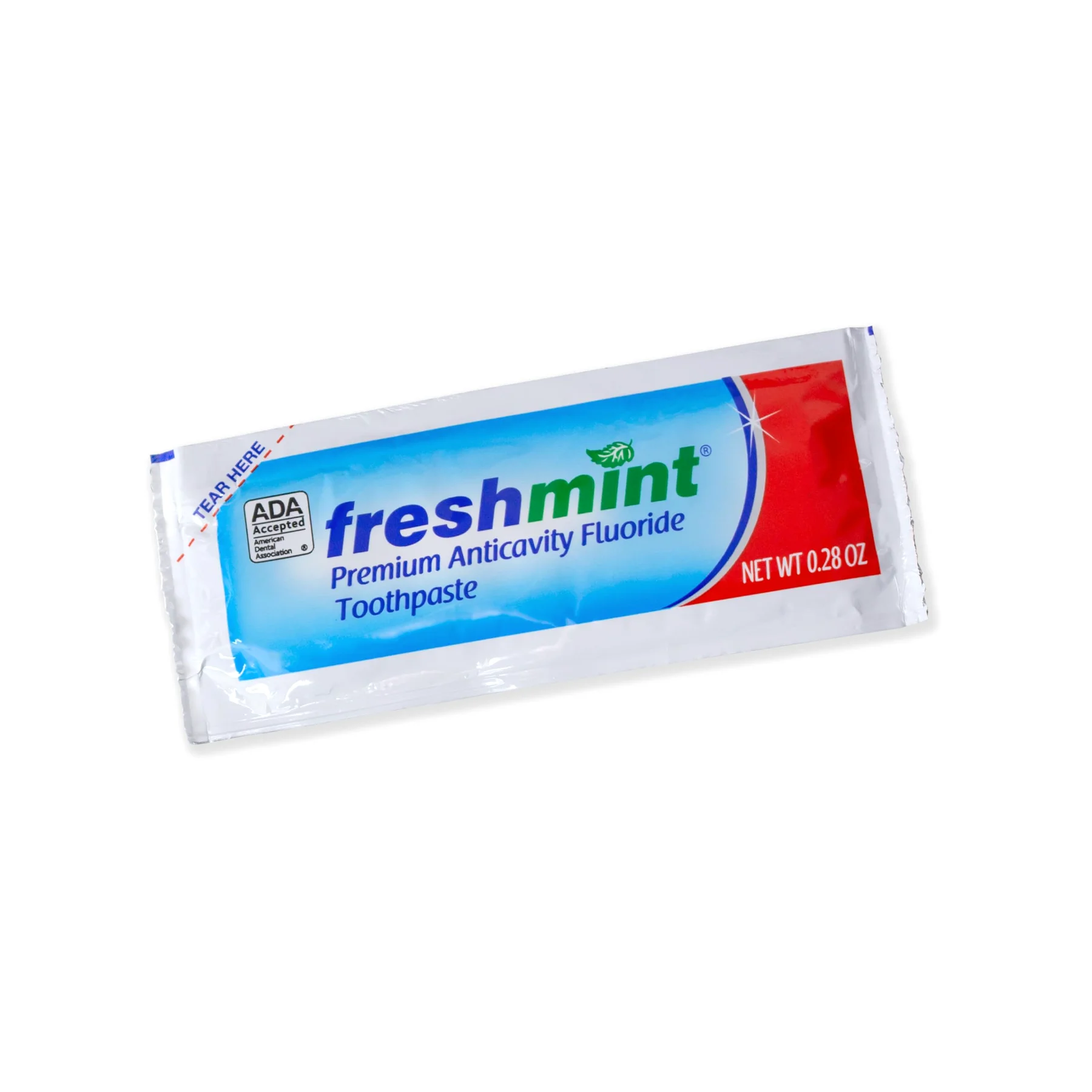
Some of our single-use packets contain a clear gel rather than a white paste. The difference is cosmetic, but it matters to some buyers.
A clear gel is transparent. It does not have the white, opaque look of a traditional paste, because it contains no titanium dioxide or similar whitening pigment. The cleaning action is the same. The fluoride is the same. The gel simply looks different in the tube and on the brush.
Some places prefer a clear gel for practical reasons. A hotel or a short-term rental that supplies toiletries may find that a clear gel leaves no visible residue on a sink or a counter, or that guests prefer the look of it. A care package assembled by a volunteer group may be easier to pack when the toothpaste does not leave white marks on the other items. And some people simply prefer the feel of a gel.
The Drug Facts panel on a clear gel tube is the same as on a white paste tube. The active ingredient, the warnings, the directions, all of it. The only difference is the inactive ingredient that gives the paste its color, or the absence of it.
What the panel does not tell you
The Drug Facts panel is thorough about the product. It says nothing about you, and that is worth remembering.
The panel does not tell you how often to brush. It gives directions for a single brushing, but the twice a day routine comes from national health agencies, not from the label. The American Dental Association and the US health agencies are consistent on this: brush twice a day with a fluoride toothpaste, clean between the teeth once a day, and see a dentist regularly. That routine is the foundation. The toothpaste is one part of it.
The panel does not tell you what to eat. Sugar feeds the bacteria that make acid, and the less sugar you eat, the less acid your teeth face. The panel cannot change your diet. It can only supply the fluoride that helps your enamel resist the acid.
The panel does not tell you whether to see a dentist. A cavity that has already formed is not going to be repaired by toothpaste. Fluoride can remineralize early damage, but a cavity that has broken through the enamel needs a dentist. The yearly visit is part of the routine the health agencies recommend, and no tube of paste replaces it.
So the Drug Facts panel is a snapshot of the product, not a prescription for your life. It tells you what is in the tube, what the paste may claim, and what the warnings are. The rest, the brushing, the flossing, the diet, the dental appointments, is the part you bring.
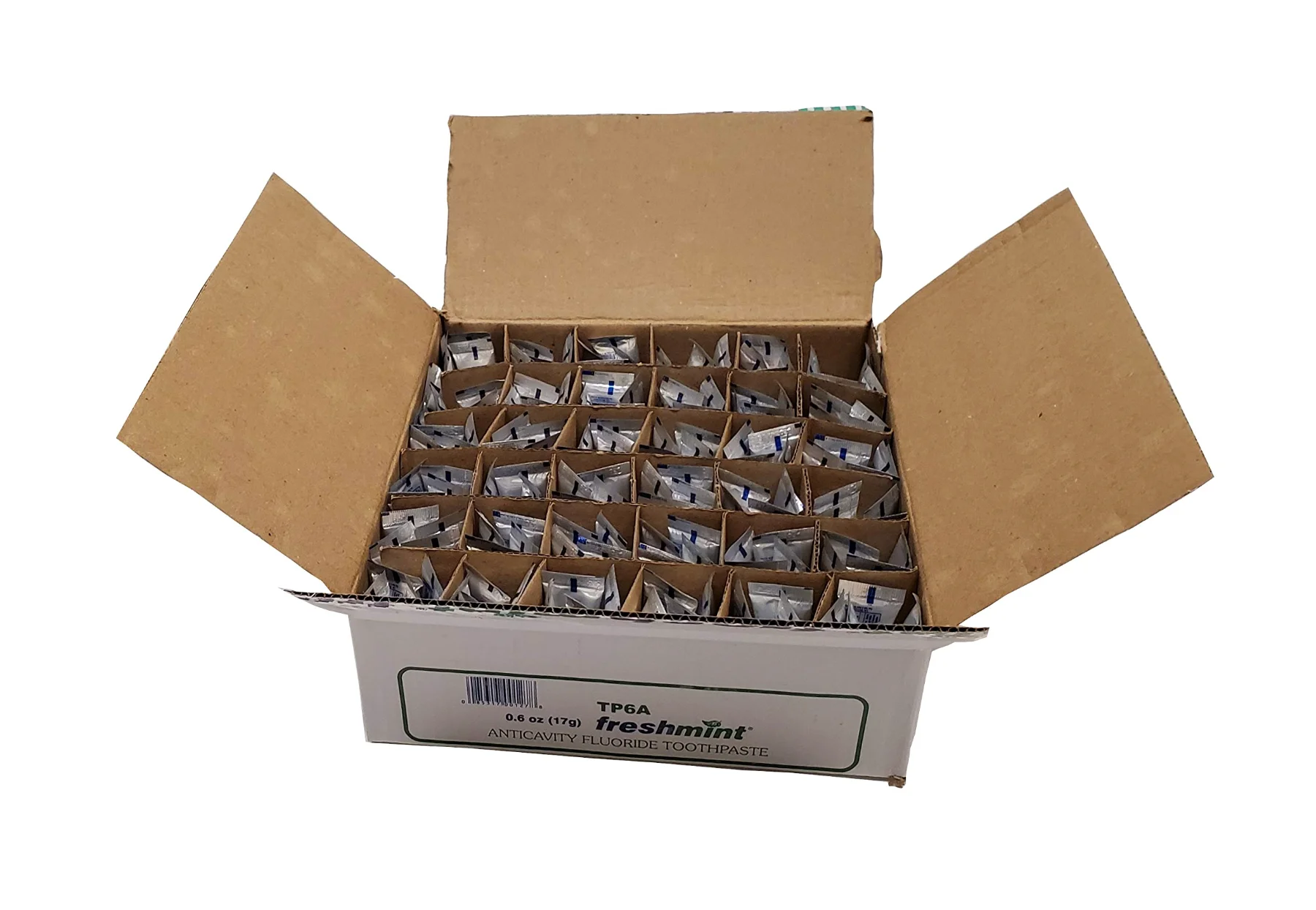
Freshmint carries the full range of these products across our catalogue: the premium anticavity tubes with the ADA Seal, the everyday tubes in larger cases, the single-use packets, the fluoride-free kids paste, the sensitive formulas, and the clear gels. The panels on all of them say the same kinds of things, because the rules are the same. What changes is the flavor, the size, the packaging, and the use case. The Drug Facts panel is the constant, and now you know what it is telling you.
Everything named here sits in Freshmint bulk oral care, on the premium toothpaste shelf and the seven beside it.